
Homily for the Solemnity of the Holy Family
December 31, 2023
Saint Patrick Cathedral
Fort Worth, Texas
Sirach 3:2-6, 12-14
Psalm 105:1-2, 3-4, 5-6, 8-9
Hebrews 11:8, 11-12, 17-19
Luke 2:22-40
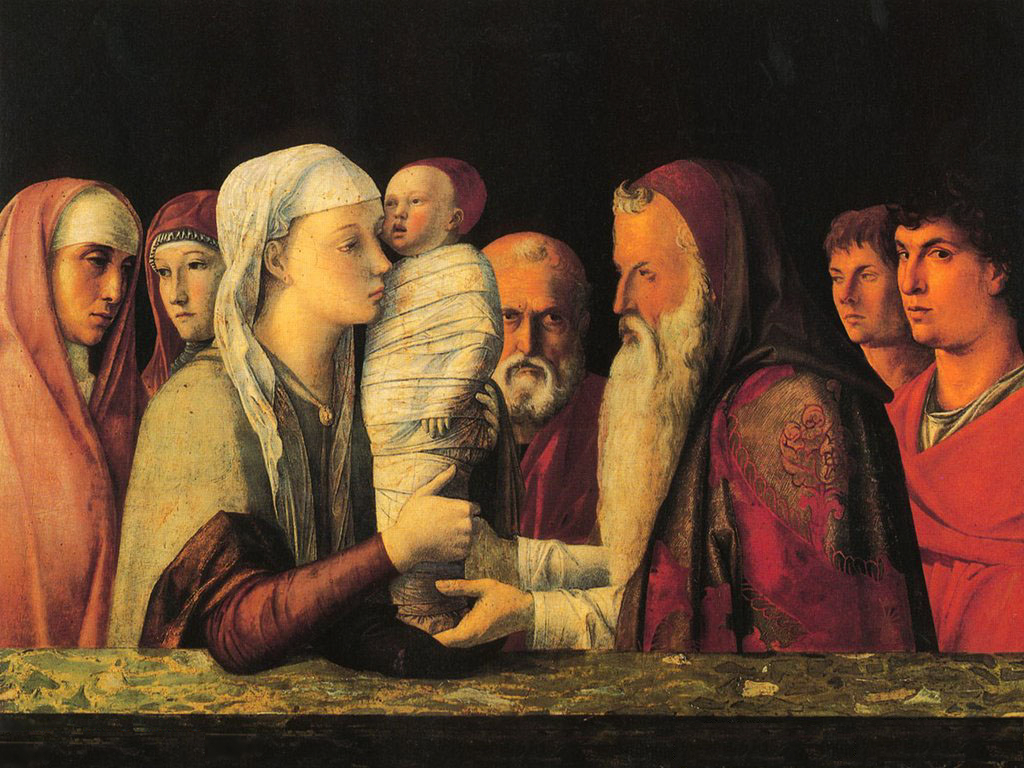
Today on the Solemnity of the Holy Family we listen to the Gospel of Saint Luke who tells us the story of what is pondered in the fourth joyful Mystery of the Rosary: the Presentation of Jesus in the Temple. The story that is conveyed in today’s Gospel is rich for reflection, especially on this Solemnity. Yet, I wish to invite us to focus upon the words of the prophet Simeon spoken especially to the Blessed Virgin Mary: “Behold, this child is destined for the fall and rise of many in Israel, and to be a sign that will be contradicted — and you yourself a sword will pierce — so that the thoughts of many hearts may be revealed.”
This prophecy by Simeon that the sword would pierce the heart of the Blessed Mother manifests that it was part of God’s plan that Mary would significantly share in the suffering of Jesus out of her love for Him and her fidelity to God. This prophecy reveals that the compassion of Mary is something even more significant and pure than the compassion to which any good mother would be naturally inclined. In speaking these words Simeon reveals that the bright glory that God reveals in the Baby Jesus is intimately tied to the dark suffering of the Cross. Love and suffering are intimately linked in the drama of God’s redemption of human beings.
Jesus is the living Word of God, incarnate with a real human nature. Since the moment of disobedience by Adam and Eve in the Garden of Eden, the history of the Old Testament shows the repeated statement of “no” by human beings to the Word of God who commands human beings to obedience and love. The contradiction directed against God’s commands to love and to serve in favor of a freedom to do whatever one desires. Christ takes on and receives as a man the insult of contradiction directed at God by human beings. This is proclaimed from His presentation in the Temple as the sacrifice to fulfill all sacrifices; it continues throughout His earthly life and ministry all the way to the culmination of the sacrifice in the contradiction of the Crucifixion. It remains eternally effective in the present moment.
As Pope Benedict XVI once stated, “God Himself is constantly regarded as a limitation placed on our freedom, that must be set aside if man is ever to be completely himself. God with His truth stands in opposition to man’s manifold lies, his self-seeking, and his pride. God is love. But love can also be hated when it challenges us to transcend ourselves. Love is not a romantic ‘good feeling.’ Redemption is not ‘wellness,’ it is not about basking in self-indulgence; on the contrary it is a liberation from the imprisonment in self-absorption. This liberation comes at a price: the anguish of the Cross. The prophesy of light and that of the Cross belong together.”
The Blessed Virgin Mary is intimately present to her Son throughout each moment of the contradiction that is leveled at him by sinful humanity throughout his life and earthly ministry until his lifeless body is taken down from the Cross and placed in her arms. Mary plays a unique and indispensable role in God’s plan of the redemption of human beings. The contradiction of her Son’s Cross is the sword that pierces and cuts through her soul. Her complete dedication to God’s Word made flesh through her “yes” to the Archangel’s announcement reveals to us what pure and authentic compassion looks like and which we can receive and offer in our redeemed discipleship of Her Son. Her Son’s burdens are her burdens. The same holds true for the just and devout Saint Joseph, silently listening to Simeon’s prophecy. Compassion and attentive silence to the Incarnate Word become part of the Christian family’s role and mission in carrying forth Christ’s redemption of human beings.
We read in today’s first reading from Sirach, “My son, take care of your father when he is old; grieve him not as long as he lives. Even if his mind fails, be considerate of him; revile him not all the days of his life; kindness to a father will not be forgotten, firmly planted against the debt of your sins — a house raised in justice to you.”
Last year when I visited India and the religious superiors of many of the priests who serve in our diocese, I saw the care and compassion of the Catholic Church caring for many elderly and young people who had been abandoned by their families because they were judged to be no longer useful or productive by the dominant pagan culture.
Many of the early Church Fathers preached consistently that insensitivity towards the suffering of others and abandonment of responsibilities to respect and to care for members of one’s own family were marks of paganism. Christians are given by Christ not only the responsibility to care for suffering family members but also the graced means to do so through their full initiation and participation in the sacramental life of the Church in being configured to Christ.
The callousness that marks so much of society today begins at home with an indifference between husbands and wives, sons and daughters, and brothers and sisters. This indifference soon leads to abandonment of the weak and unproductive to suffer an anonymous death. This is a moral return to a pagan worldview that the fate of human beings is inescapable, and their lives are without purpose except to seek freedom from burdens that limit human freedom. This has resulted in the deadly polarization that plagues us because we have abandoned God in favor of the cult of self, we have replaced the Gospel with ideology, and we have replaced the family with political partisanship.
In a few moments we will approach the altar of sacrifice that is also the banquet table of unconditional love. As we do so, may we do so with confidence that Who we receive can spare us from our contradiction of His Word of freedom that liberates and does not confine us to self-absorption.
 Life on the Chrism Trail