
Homily for the Solemnity of the Assumption of the Blessed Virgin Mary
August 15, 2024
Saint Patrick Cathedral
Fort Worth, Texas
Revelation 11:19A; 12:1-6A, 10AB
Psalm 45:10, 11, 12, 16
First Corinthians 15:20-27
Luke 1:39-56
Mary’s positive response to the Archangel Gabriel’s message of the Annunciation was to travel in haste to attend in love to her pregnant cousin, Elizabeth, whose pregnancy would have difficulties because of her advanced age. Mary’s journey is made “in haste” because the mission of the Lord defies indifference and passivity, it is a vocation that requires a prompt response, it possesses a dignity and importance requiring urgency and mindfulness for it is offered and can only be received in the freedom of love. Mary’s response to Elizabeth’s greeting is a song, an outpouring of joy for what God has done in her life. Through her song, Mary heralds the victory of her Son over the dragon.
This inspired prayer is not about Mary’s powerfulness, but about the power of God in her life, in that of her ancestors, and in that of Her Son’s Church. Among other things we can learn from the feast of the Assumption is that our awareness of God’s blessings and gratitude toward Him open us more fully to the power of the Holy Spirit leading us to our true home in heaven. God’s love for us is so overwhelming that our true home in heaven ultimately includes the resurrection of our bodies. This is why as Christians we honor the bodily remains of those who have died with Christian burial or the internment of cremated ashes in a columbarium or mausoleum. The Blessed Virgin Mary is preserved from all sin by the merits of Her Son. She is the first Christian to receive the share in her Son’s Resurrection as she is taken into heaven, body, and soul. This too can be our destiny if we ask her help and follow her example.
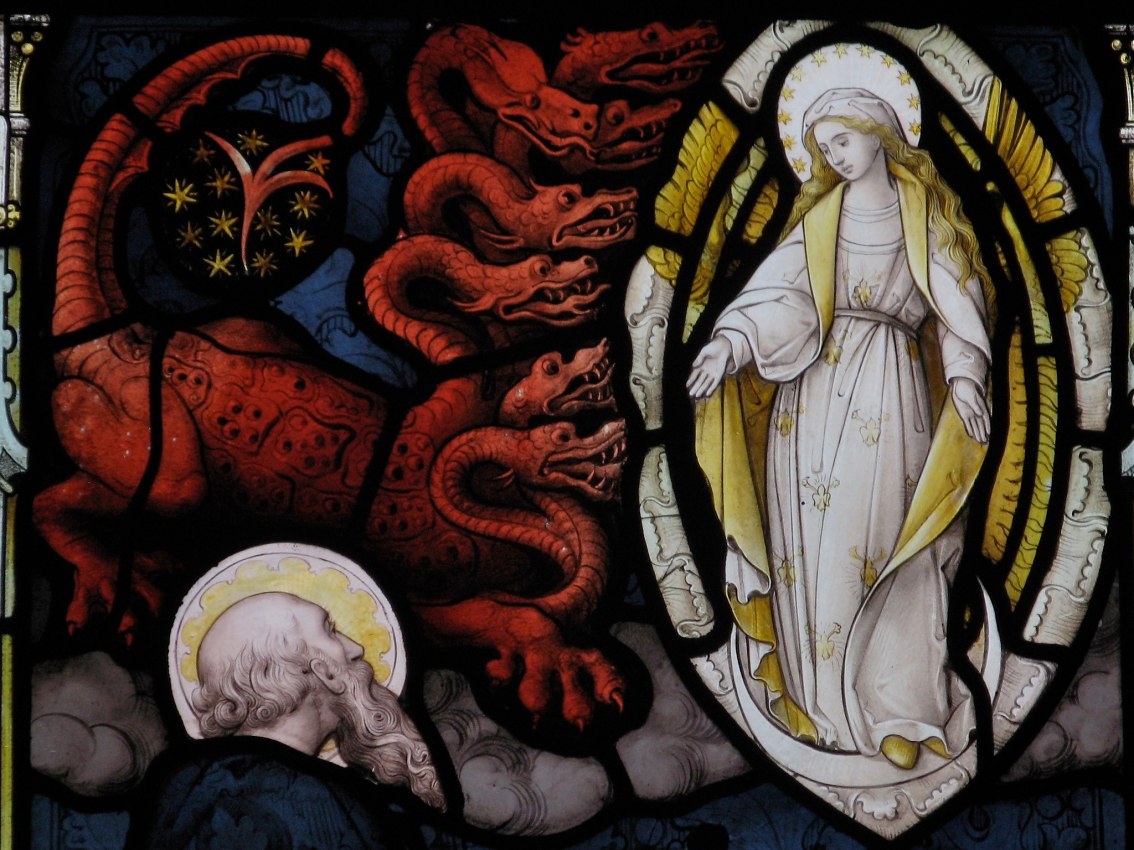
We also learn from the Solemnity of the Assumption of the Blessed Virgin Mary as we listen to our first reading from the Book of Revelation that there are two conflicting and irreconcilable ways to live our lives. There is the way of the dragon, and the way of Mary. The arrogant way of the dragon offers the sinful love of self where one becomes so selfish that he becomes resentful of God and indifferent to the needs of other people. The humble way of Mary offers the complete love of God whereby a person becomes holy and virtuous, open and trusting of God, peaceful and more mindful of the needs of others than one’s own needs.
Mary’s way involves our complete trust in God cultivated through prayer and the corporal and spiritual works of mercy. The way of the dragon involves our rejection of God and our demand to live our lives according to our own insatiable desires. When we hear this story in the Book of Revelation, it appears that in this battle the odds favor the dragon. The Lady appears to be weak and powerless; the dragon is fierce and ruthless. The Lady is in the most vulnerable state of giving birth to a child; the dragon appears to be invincible and imposes death upon many.
The author of the Book of Revelation employed the image of the dragon to represent the Roman Empire which was attacking the Church ruthlessly through its persecution and murder of Christians. History has shown us that the power that was the Roman Empire would decline, brought to destruction from within by its own corruption and its decadent ways. We know that in this battle the victory was won through the power of Christ shown clearly in the blood of the martyrs and resulting in the conversion of many people to Christ and His Church of which His Mother is the preeminent symbol. This same story has been played out throughout two thousand years of history and most recently in the bloody persecutions and martyrdoms perpetrated by Nazi Germany and Soviet Russia, who were opposed to truth and human dignity. They too appeared invincible, but they too collapsed because of their rejection of God and their embrace of evil that only appeared to be powerful.
As Pope Benedict XVI once indicated on this solemnity, “Today too, the dragon exists in new and different ways. It exists in the form of materialistic ideologies that tell us it is absurd to think of God; it is absurd to observe God’s commandments: they are a leftover from a time past…even now this dragon appears invincible, but it is still true today that God is stronger than the dragon, that it is love which conquers rather than selfishness.”
The Solemnity of the Assumption reminds us that there are before us two ways: the way of death or the way of life, the way of autonomy or the path of faith, the way of despair or the way of hope, the way of hatred or the way of love, the way of the dragon or the way of Mary. We know that the dragon present in these oppressive but seductive ideologies will fall again because of its corruption and decadence. We know this because the way of Our Lady, full of Grace, has been opened to us by the victory of Her Son’s Cross. She not only serves as an example for us but even more intensely as our Mother, our intercessor, and our friend. She helps us on her way and stands compassionately with us at the foot of her Son’s Cross and sacrifice in which we share and which we now offer in an unbloody way on this altar.
 Life on the Chrism Trail