
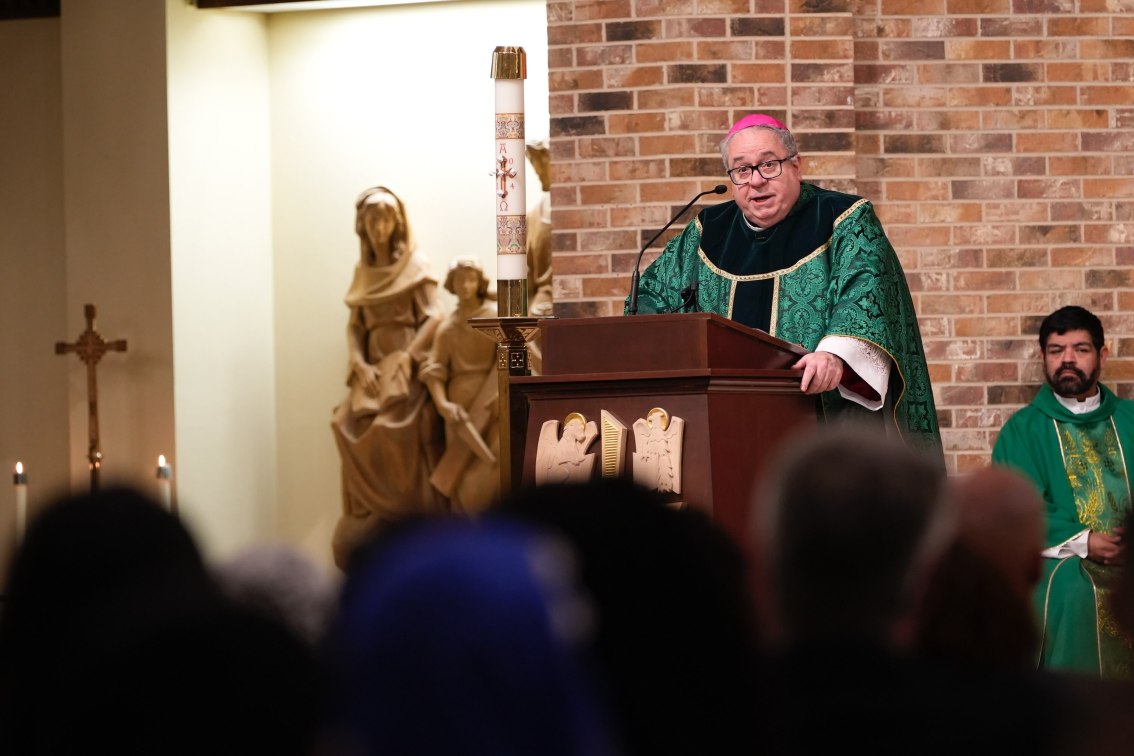
Homily for the Sixth Sunday of Ordinary Time
February 15, 2025
St. Bartholomew Catholic Church
Fort Worth, Texas
Jeremiah 17:5-8
Psalm 1:1-2, 3, 4, 6
1 Corinthians 15:12, 16-20
Luke 6:17, 20-26
Jesus cautions us that prestige, power, and complacency can prompt us to lose our way with Him. To be a disciple of Jesus involves our dying to these selfish preoccupations so that the life of Christ can exist in us that we might raise with Him from the dead on the last day. His teaching on the Beatitudes in today’s Gospel requires us to invert the sense of values and purposes that our contemporary world espouses for meaning and happiness — power, financial success, and pleasure. These values only seem to promise freedom and to bring security to the individual. This teaching of Jesus in His Sermon on the Plain invites His disciples to risk estrangement from this world by trusting Him and by following Him in the way that He lives and loves. This way of life and love that involves surrender and trust is most clearly manifested and made present in the sacramental vocation of marriage with its graced and promised intentions of permanence, fidelity, and openness to God’s gift of children.
Read more…
Homily for the Vigil of the Fifth Sunday of Ordinary Time
February 9, 2025
St. Patrick Cathedral
Fort Worth, Texas
Isaiah 6:1-2a, 3-8
Psalm 138:1-2, 2-3, 4-5, 7-8
1 Corinthians 15:1-11
Luke 5:1-11
The readings from today’s liturgy offer us three examples of three distinct examples of vocation from God: Isaiah, Saint Peter, and Saint Paul. Each of these readings depict the following aspects of vocation: a sense of unworthiness in being called by God; a decision to care enough to respond to the call amidst the indifference of other bystanders; and a fresh sense of confidence that accompanies the decision to trust God and to place the response trusting God and putting one’s response into words and action.
Read more…
Homily for the Optional Memorial of Saint Ansgar
Mass for the Institution of Ministries of Lector and Acolyte
February 3, 2025
Theological College
Washington, DC
Isaiah 52:7-10
Psalm 96:1-2, 2-3, 7-8, 9-10
Hebrews 10:19-25
Mark 1:14-20
To consider the lay ministries of lector and acolyte in the life of the Church and in their role in seminary formation requires us to review two Papal documents: the Motu Proprio, Ministeria Quaedam of 1972 by Pope Saint Paul VI and the Motu Proprio, Spiritus Domini of 2021 by Pope Francis. Ministeria Quaedam identified the character of Lector and Acolyte not as minor orders inherently within the clerical state but as being “closely linked to liturgical actions that in practice were being exercised by the laity.” This shift in focus led to the development in doctrine within the Latin Church that these ministries while distinct from ordained ministry are open to all the baptized. This Magisterial recognition has graciously spared the Church from clericalizing male and female members of the laity.
Read more… Life on the Chrism Trail