
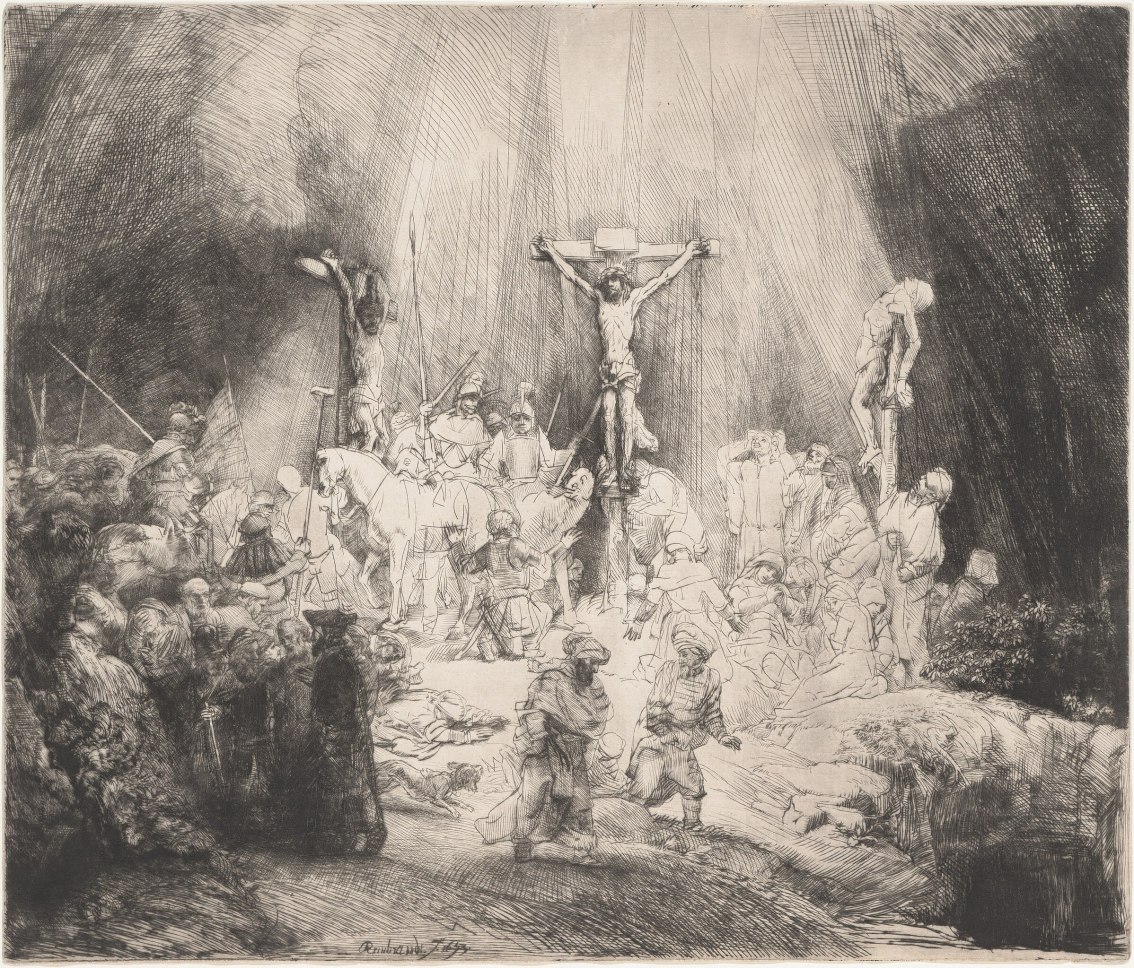
Homily for Palm Sunday
April 13, 2025
St. Patrick Cathedral
Fort Worth, Texas
Isaiah 50:4-7
Psalm 22
Philippians 2:6-11
Luke 22:14-23:56
Among the many lessons I learned from the dedicated ministry and vocation of the Franciscan sisters who taught me in grade school was how to prepare each night for death by making an act of perfect contrition. The sisters were clear that preparation for death was not just preparation for an event but was truly preparation to meet Jesus who loved each of us unconditionally as our friend by giving us the gift of life eternal through His death freely offered on the Cross. The sisters wisely instructed us that an “act of contrition is not a magic formula, it is an honest conversation with a friend — Jesus.” She added, “simply speak the name of Jesus in love to Him, with sadness for your sins, confidently say ‘My Jesus, have mercy.’” I have found that these four simple words are helpful for meditating on God’s love and mercy.
In our Gospel today, the repentant thief addresses Jesus by His first name at the hour of his death. It is the only time in any of the four Gospels when Jesus is addressed by His first name by another human being. “Jesus,” as we read at the start of Luke’s Gospel is the name given to Him by Joseph and Mary at God’s direction through the message of the Archangel. The holy name of “Jesus” means “the Lord saves” — “Joshua.” The penitence of the thief involves perfect contrition made from a recognition of the Lord’s unconditional love and mercy for all. The repentant thief makes this act of perfect contrition from the perspective of his own cross united to the Cross of Jesus. He is selfless enough to recognize Jesus’ kingship in his suffering. The good thief’s response is strikingly different than the embittered and angry response of the other thief whose situation is identical — except for the contrition and self-awareness that comes to the good thief by uniting his cross with the saving Cross of Jesus. The penitence of the first thief on the cross opens the door at which Jesus knocks — the door of perfect friendship — to know Jesus and to be known by Jesus intimately as a friend.
The crowds in the Gospel of today are filled with people who have willed not to know nor to be known by Jesus — they are each an anonymous individual who identify with each other only by similar and private interests. They offer us an example for our reflection on the individualism of today whereby we refuse all of the natural relationships and graced communities that enable us to flourish as human beings when united with Christ. Such communities include marriage and family, neighborhood and church, nation and world. In the face of the authentic humanity displayed in Jesus, the crowds chose anonymity and isolation. For them, Jesus is a cause or an event, but not a friend. They no longer have any use for Him because of His Cross.
The Sanhedrin and Pilate along with Herod condemn Jesus. The Sanhedrin condemns him as a “blasphemer” even though they are not mistaken about His true identity as the Christ. Pilate and Herod condemn Him as an “usurper” of Caesar’s power and of Herod’s influence. Each of them is using Jesus as a means to their own respective and selfish purposes. Herod and Pilate become friends with each other but not in the true meaning of friendship that Christ offers. Herod and Pilate have selfish interests that coincide and that is how they understand friendship. Jesus is useful to them, and they are not His friends. They do not want a share in His Cross.
On this Palm Sunday, as we begin Holy Week, we reflect on the Passion of Jesus, who loves us as a friend and invites us to such honest friendship in authentic contrition and repentance for our sins. This is the only way to true humanity — the trust and vulnerability involved with friendship — offered to us unconditionally and lovingly by Jesus in the mystery of His Cross. We have a choice to make. We are offered the time for a decision. Our lives will end as we live them. Will we live with Jesus as a cause for a religion of our own making? Or will we live with Him in His Church? Will we invoke Jesus as a useful means to achieving our own purposes? Or will we live and die with Him as our friend, with our cross united with His Cross — with us contrite for our sins because of His love for us? My Jesus, have mercy.
 Life on the Chrism Trail