
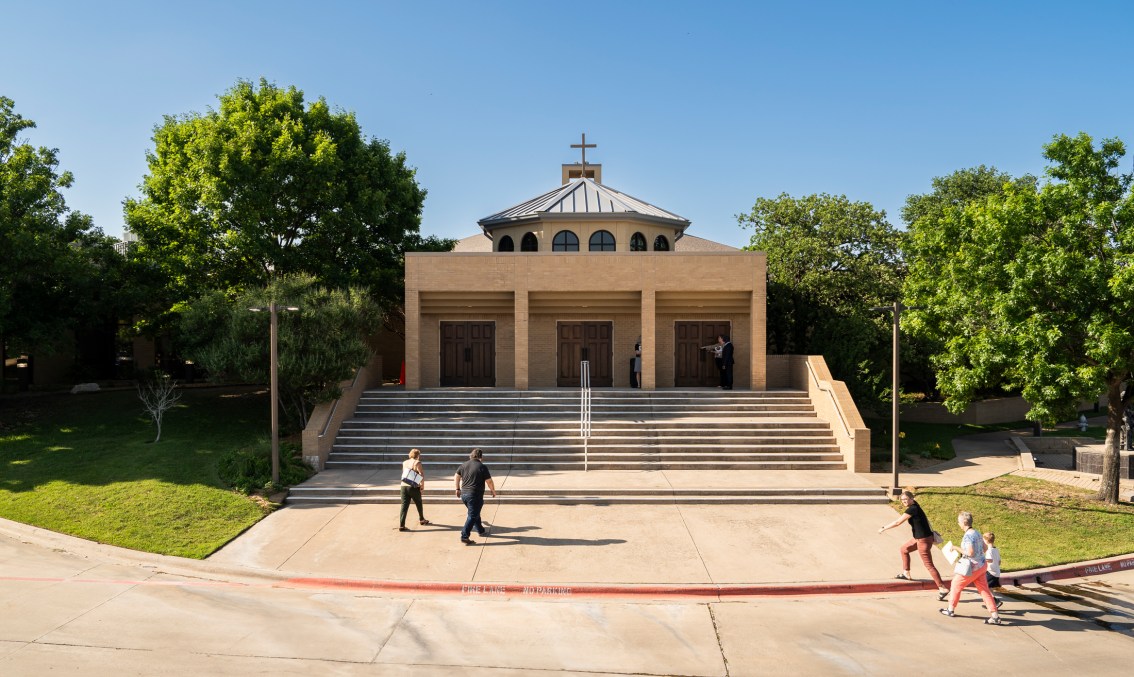
Homily for the Vigil for the Second Sunday of Lent
February 28, 2026
St. Vincent de Paul Catholic Church
Arlington, Texas
Genesis 12:1-4a
Psalm 33:4-5, 18-19, 20, 22
2nd Timothy 1:8b-10
Matthew 17:1-9
The first reading of this Sunday’s Mass presents the call of God to Abraham. At this time in his life, Abraham is seventy-five years old — a time that common sense tells us is too late to expect change from any human being. Those of us who have loved ones who have aged and entered the elder cohort of the human population or who have even themselves entered old age can attest to the wisdom of such proverbs as, “She is too set in her ways;” or also, “He is an example that you cannot teach an old dog new tricks.” Yet, the matters of vocation and conversion are not matters of human initiative, ingenuity, or will power.
Vocation and conversion are closely fused together in that they begin with God’s initiative in human lives, something that we call “Grace.” This Grace itself is the source of our freedom expressed in each of our willingness to accept this gift and all that the gift entails irrespective of our stage in life.
So even though Abraham is in his old age God calls him to leave the security of his extended family and all things familiar to go to some unknown land for God’s saving purposes. God promises to make a great nation of Abraham who is to become the father of many nations — to become our father in faith. To do this Abraham must not close the door on the past but he must let go of past patterns of complacency in behavior and thought. He must come to trust in God completely.
God asks this of Abraham because trust in God is the start of faith; it is also the start of God’s redemption and salvation of all human beings from the power of sin. One of the first things lost by humanity after the original sin of our first parents in the Garden of Eden was a harmonious and trusting relationship between God and human beings. Through sin, the direct and intentional rejection of grateful and loving reliance upon God, human beings entered into darkness and alienation from God and from themselves by trying to be gods instead of accepting their own human nature and identity as created in God’s image and likeness. Human beings began to see God as an adversary and competitor who threatens their claims to autonomy but what is in fact slavery.
Abraham comes to trust God. He is inspired to have faith in God, and he abandons everything he knows to begin again with God and without self-sufficiency. We are presented here with a fundamental aspect of Abraham’s faith: it is impossible to believe in God and at the same time to hold onto things that provide us with a false sense of security and complacency. Faith requires that we be not tied down to things of this world as if they are all that exist, but instead that we understand the things of this world as good because of their creation by God but as transitory and not preferable to God Himself. This faithful disposition shows itself when we are available to serve God and others even at great inconvenience to our own important plans regarding social or family life. Clinging to comfortable situations and social expectations prevents us from imitating the life of Jesus and from turning away from sin.
The Transfiguration of Christ teaches His disciples and friends not to be afraid, but not to mistake the consolation of religious experience with the gift of faith that requires them to face courageously the difficulties and persecution involved in truly following Him. They must also follow Him down the mountain of Tabor with its exquisite clarity and peace to the confusion and anguish that accompanies the Cross of Jesus. His admonition to them not to tell anyone of the Transfiguration until after the Resurrection shows that there is more to the story of discipleship than emotional highs. The Transfiguration can only be understood in light of the Resurrection and the only way to the Resurrection is through the Crucifixion.
Your parish has always been dedicated to faith, service, and community, helping each other to be accountable to the Gospel through love of God and neighbor. While a parish is not in itself the local church, the parish is essential to the life of the local church of the diocese. We cannot be faithful and Catholic Christians without each other. This is not always experienced like the emotional height of the Transfiguration. Your parish’s patron, Saint Vincent De Paul, once said: “We must hold as an irrefutable maxim that the difficulties we have with our neighbor arise more from our unmortified moods than from anything else.” You do this so well and so generously in caring for each other as children of God.
Your parish of Saint Vincent De Paul is fifty years old. On February 29, 1976 (Leap Day), Father Philip Johnson celebrated the first parish Mass in warehouse space on loan from the local Knights of Columbus. After many years of dedicated and faithful hard work, Saint Vincent De Paul Catholic Church was dedicated on November 4, 1984. Today we celebrate the same eternal Sacrifice in this beautiful church with gratitude for God’s many blessings that have passed through the ministry of your pastors, deacons, and lay leadership throughout this time. At fifty years, you are twenty-five years younger than Abraham at the time of His Call. The Grace that the Lord continues to offer you prevents you or any of us from being “too old to learn new tricks” and to be refreshed by the ever newness of the Gospel of Jesus Christ as authentically handed down from the Apostles and through their successors the bishops. Let us approach the Lord’s banquet table with hope and expectation of His goodness.
 Life on the Chrism Trail