
Homily for the Fifth Sunday of Lent
March 22, 2026
St. Patrick Cathedral
Fort Worth, Texas
Ezekiel 37:12-14
Psalm 130:1-2, 3-4, 5-6, 7-8
Romans 8:8-11
John 11:1-45
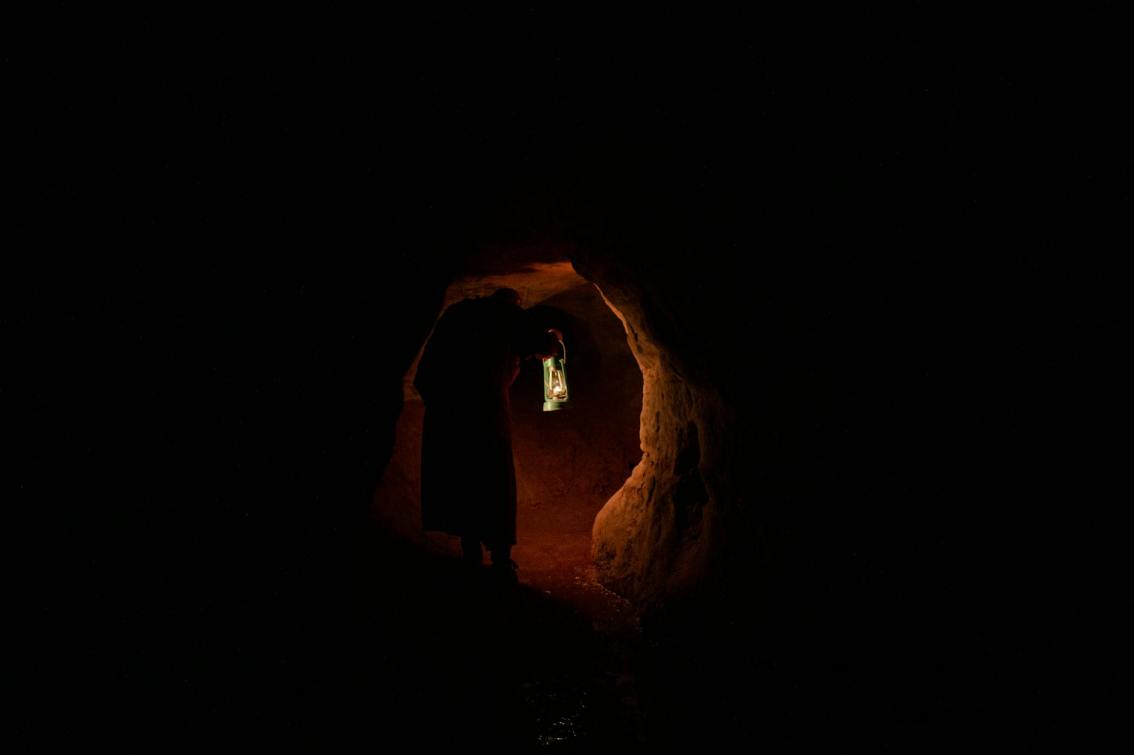
We are faced with a question that surfaces when reflecting upon this Gospel reading especially considering the circumstances of today. That question is, “What if when Jesus commanded Lazarus to come out, Lazarus had not bothered to respond and simply remained in the tomb?” This seems like a question that is ludicrous for us to consider. Which one of us would not respond to the command of Christ and instead prefer the darkness of the tomb bound up by the trappings of death? Which one of us would be indifferent to another opportunity to live life?
Yet we must admit that it can be tempting to stay in the tomb. We must admit that we all are prone to have this disposition, the temptation to abandon the responsibilities of life, to cut ourselves off from others and from the risks of life well lived, to numb ourselves from the pains attached to human life. Think of the neglect that many display towards the corporal work of mercy to honor the bodies of our dead loved ones with Christian burial. Think of the recent “gamifying” of the deaths of enemy combatants in war. Think of the indifference to victims of crime and violence. Think of the apathy of too many people to the conditions of those awaiting deportation with separation from families, or the cutting ourselves off from our families and friends because of grudges — these are all forms of spiritual death and entombment because death fractures relationships and that hurts us and others.
We see this connection between death and the fracturing of human relationships several times in the Gospels: Jesus doesn’t just raise Lazarus, the brother of Martha and Mary — he also raises the little daughter of Jairus, a synagogue official and the son of a widow from Nain. These are the three times addressed in the Gospels where Jesus restored life to people who had died. These miracles involved a mother and a father, a son and a daughter, and brothers and sisters. Christ does not bring and restore life just to individuals, but to persons belonging in a family, with their familial relationships and even the wider relationships of friends, the people who came to comfort Martha and Mary, the large crowd that accompanied the widow, the people in the house of Jairus.
Each death is a painful separation between the dead person and those who love them — those who miss them. We all know this — we all know that death breaks relationships — but we sometimes forget that intentionally or even passively closing in on ourselves and withdrawing from relationships with others and with God is a decision for death too.
We must recognize ourselves in the position of Lazarus on the threshold between darkness and light, between death and life, between sin and righteousness. At this threshold, the bindings of death and darkness hinder us, and we must recognize that we ourselves are not able to choose the freedom of life unless God offers us the Grace of willingness to answer Jesus’ call to leave the tomb. We need the assistance of God to care enough to answer the call of Jesus to leave the tomb. We require the help of others to remove from us the bonds of the tomb.
This removal of the bonds of death is the sacramental work of the Church. This mission belongs to us as the sacramentally initiated members of the Church to unbind those called from the tomb through our compassionate service. Each of us is also “Lazarus” because we have been unbound at Jesus’ command by those who have been unbound before us. For example, this is what parents and godparents promise to do at the baptism of their children; this is what sponsors at Confirmation promise to do for their confirmands through good word and example.
The Church asks us to listen to today’s Gospel passage not simply to be edified but that we might be conformed to Christ, who is among us with a work to complete. So even in these difficult times, especially in these difficult times, our prayer must draw us into the Grace of willingness to change, to be forgiven, to forgive, and to care about those who suffer.
At the beginning of this homily, I asked, “What if Lazarus had not answered Christ’s command to leave the tomb?” The Good News is that Lazarus obediently responded and came out of the tomb. The very next section of John’s Gospel describes Jesus being seated at table for supper … and Lazarus is described as “one of those at table with Jesus.”
At this Eucharist, Jesus likewise invites us who have been delivered from the tomb and unbound through baptism and reconciliation “to be one of those at table with Him.” Today, as we unworthily approach the altar, let us listen to Jesus’ voice calling us out of the tomb — and ask Him for the grace to say “Yes” like Lazarus did.
 Life on the Chrism Trail