
Homily for the Twenty-sixth Sunday of Ordinary Time
October 1, 2023
St. Michael Catholic Church
Bedford, Texas
Ezekiel 18:25-28
Psalm 25:4-5, 6-7, 8-9
Philippians 2:1-11
Matthew 21:28-32
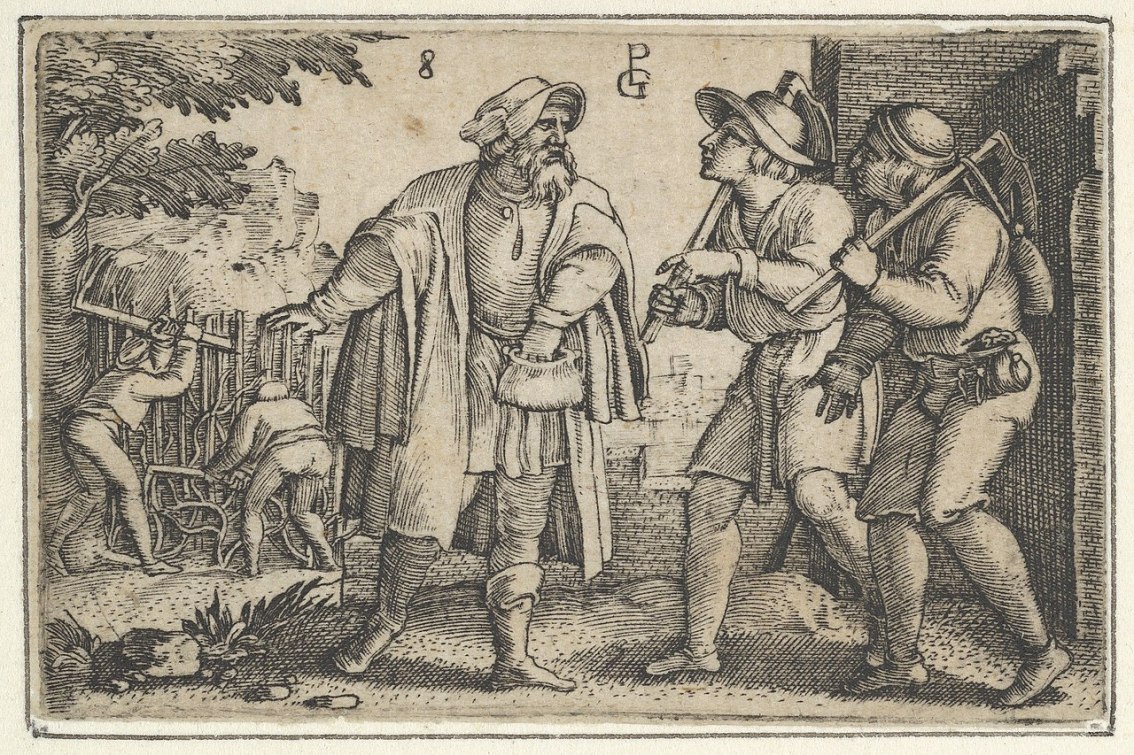
In today’s Gospel, Jesus presents us with a parable about a father with two different sons. The first son rejects the father’s direction to go out and work in the vineyard, but then later proceeds to answer his father’s direction and does go to work in the vineyard. The father makes the same request of the second son who responds reverently that he will do as the father asks, but then proceeds not to do what he has said that he would do. Jesus asks the chief priests and elders which son did as the father requested. They respond that the first son did as the father requested. Jesus then makes his point by implicating the chief priests and elders as maintaining the same disobedience and false piety as the second son, while prostitutes and tax collectors display the obedience of the first son.
Jesus’ point is that conversion is a grace and that it requires of us the humility of obedience with actions and not just words – a willingness to be converted.
When Jesus uses parables to teach His disciples, He does so to tell His audience more about God than about the audience. In using this parable, Jesus is telling us about God’s great preference for sinners who convert and turn to Him than for those who are content with their own virtue or piety. The first son uttered “no” before he converted to “yes”; he repented. This teaches us that God is patient with each of us: He never gives up on us. God does not stop after someone has said “no” to Him.
God leaves us free even if we distance ourselves from Him through sin, because that same freedom that we enjoy is intended to be the only means by which we love God and come to obedience. This truth should encourage us when we worry for our loved ones who display an indifference or even a hostility towards God and the Church. Fathers and mothers should especially realize through this parable that God loves their children even more than they love them and will do everything to draw them to Him.
At the heart of this gift of humility and conversion is the message of Saint Paul’s Epistle to the Philippians that we have just proclaimed. Saint Paul urges the Philippians of the first century and us today to be humble and “regard others as more important than yourselves, each looking out not for his own interests, but also for those of others.” Saint Paul then clearly connects our human capacity to be humble with the attitude revealed by Christ “Who, though He was in the form of God, did not regard equality with God something to be grasped. Rather, He emptied Himself, taking the form of a slave,” and “humbled Himself, becoming obedient to the point of death, death on a cross.”
The grasping at equality with God was exactly what Adam and Eve did when they disobeyed God and followed the deceit of the serpent in the Garden of Eden, believing that they would become like God and have no need for God. They “grasped at” divinity and their humanity fell. Christ, the Son, who is divine and human, humbly accepted obedience to the Father’s will not only in becoming fully human through the Incarnation, but even more so in accepting death as a man. Not only did He accept the indecency of death, but accepted the most disgraceful type of death, that of a criminal stripped naked, disfigured, and humiliated. Christ emptied Himself of the power, glory, and beauty of divinity that He might transform and heal humanity made ugly by sin. His grace of humility given to us enables us to empty ourselves of the pretense of humanity that misunderstands God to be a rival and so grasps and clutches at trying to be God, without need for Him or anyone else.
Saint Therese of Lisieux, whose feast falls on this date, offered a great instruction on humility and holiness that helps alleviate our fears that tell us that humility and holiness are impossible for us to live, “As soon as God sees us convinced of our own nothingness — He stretches out His hand to us; but if we wish to attempt great things, even under the pretext of zeal, He leaves us alone. It is sufficient therefore to humble oneself and to bear our imperfections meekly: that is true sanctity.”
This self-emptying is impossible without God’s grace and our willingness to accept it and to ask for it. It involves more than words. It involves patiently and imperfectly acting in response to God’s love by praying and by becoming a servant of others, putting their needs before our own. Pope Francis offered a beautiful insight into this required change on our part, “Conversion is a painful process, because there is no path of holiness without some sacrifice and without a spiritual battle. Battling for good; battling so as not to fall into temptation; doing for our part what we can, to arrive at living in the peace and joy of the Beatitudes. Today’s Gospel passage calls into question the way of living a Christian life, which is not made up of dreams and beautiful aspirations, but of concrete commitments, to always open ourselves to God’s will and to love for our brothers and sisters. But this, even the smallest concrete commitment, cannot be made without grace. Conversion is a grace we must always ask for: ‘Lord, give me the grace to improve. Give me the grace to be a good Christian.’”
In a few moments, united as Christ’s Body, we will empty ourselves of all our attempts to grasp at divinity by placing our truly human needs upon Christ’s altar of sacrifice and offer them along with His eternal offering that makes present His sacrifice on the cross. In so doing, we are emptied to become filled with His divine grace that we might become what we receive.
 Life on the Chrism Trail