
Homily for the Third Sunday of Easter
April 19, 2026
St. Patrick Cathedral
Fort Worth, Texas
Acts 2:14, 22-33
Psalm 16:1-2, 5, 7-8, 9-10, 11
1 Peter 1:17-21
Luke 24:13-35
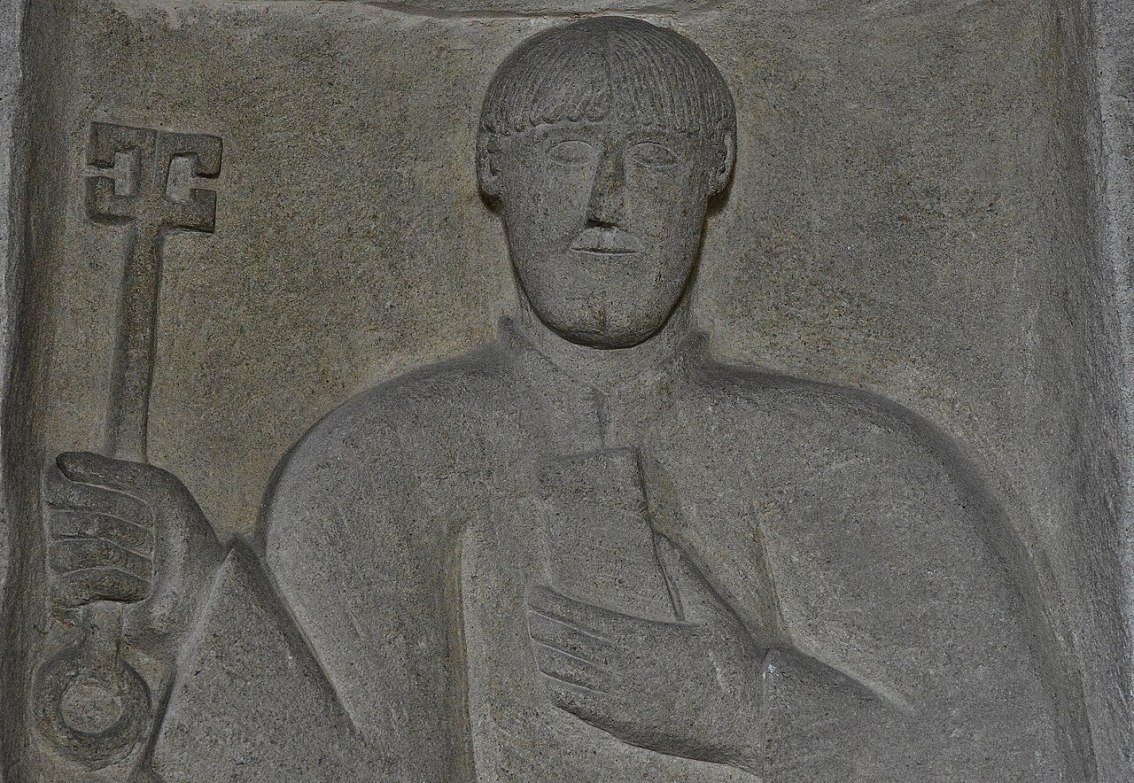
It is in the light of Jesus’ revelation as experienced by Cleopas and his fellow traveler on the way to Emmaus and recorded in Luke’s Gospel that Peter — the first pope — preaches in both the first and second readings from today’s Liturgy. In these first two readings, Saint Peter speaks to all the nations of the world that this Man, Jesus Christ — the One they had crucified and seen suffer and die — has been raised from the dead. As a witness of the Resurrection, humbled after his cowardice on Good Friday, Peter preaches to the world that “our futile lives and conduct have now been ransomed because of the precious Blood of Jesus Christ.” The Cross and Resurrection of Christ have changed everything, including our destiny and our capacity to act morally as redeemed human beings. The Death and Resurrection of Christ is what now informs our conscience.
Our futile lives and conduct for us living today involve our attempts to shape and to inform our consciences based upon our political processes. Much of the frustration we experience through polarization in our political life comes from moral claims placed upon ourselves and others that we arrive at through voting and the manipulation of political opinion by partisan activists within and outside of the media. Yet, we cannot arrive at a trusted morality based upon the consensus of the political order. Rather, the Revelation of Jesus Christ shows us that the unchanging morality of the Gospel should inform our consciences, and, on that basis, we can shape consensus within the political order.
The Pope’s prophetic voice rightfully challenges all of us at heart to accept the truth that a good end does not justify immoral means to achieve that good end. The refusal on our part to accept the truth that the end does not justify the means is what underlies every one of our sins that has produced a damaging effect on society: abortion to end domestic violence; in vitro fertilization to end infertility; contraception to end the poverty of single motherhood; the destruction of an entire civilization to end terrorism; and the indiscriminate bombing of civilians in Dresden to end the tyranny of Hitler.
If we believe that a good end justifies immoral means, then we wrongly draw our morality from a politics based upon the shared private interests of the powerful and soon look to God only as an afterthought to bless our decisions. Instead, as Catholics we are called to inform our morality from the full Revelation of God and the precepts of the Natural Law and then afterwards develop our political goals from these trusted moral principles towards forming a just and flourishing society.
It is especially the vocation of Saint Peter and his successors to guard the deposit of faith by relying on the Grace of the Holy Spirit to transcend our political interests. This is why Pope Leo XIV has preached about our responsibility to discern the justice of the purpose and the means used in the war in Iran. This is why Pope Francis spoke so clearly about the imposition of gender ideologies in Africa and other developing nations by the nations of the West. This is why Pope Benedict XVI spoke so clearly against the tyranny of relativism that underlies acts of terrorism perpetrated in the name of God. This is why Pope St. John Paul II spoke so clearly about abortion and the culture of death; contraception and the true meaning of marriage; and the responsible stewardship that we have for God’s creation.
As successors of Saint Peter, these very human men are pastors with responsibility over the whole Church — like Peter in the first and second readings of today, the Pope has a vocation and mission from Christ to proclaim Jesus Christ to the world — and he does so from his responsibility as the Vicar of Christ relying on the Grace of the Holy Spirit. It is a grave misunderstanding especially for Catholics to be led astray by those activists within the media who have cast current events as a political battle between the President of the United States and the Pope.
It is only through encountering Jesus Christ in Word and Sacrament that we can truly recognize Him elsewhere. As Cleopas and his companion on the road to Emmaus show us in their speedy return to the 11 Apostles, the apostolic authority to teach, sanctify, and govern the Church has been from the very day of Christ’s Resurrection the guarantor that in Word and Sacrament we meet and adore the true Lord rather than get lost in our own ideas and preferences about who Jesus is or what He has taught and asks of us. We must avoid the temptation to refuse to accept the Church’s authority and witness as the faithful servant and teacher of the Gospel because we want a Christ who thinks just as we think and who teaches precisely and pragmatically what we regard as wisdom. This is not revealed religion. This is not the Gospel of Jesus Christ. This is simply idolatry clothed in false piety, and it is not the authentic Christian life.

