
Homily for the Twenty-eighth Sunday in Ordinary Time
October 11, 2026
St. Rita Catholic Church
Ranger, Texas
Isaiah 25:6-10a
Psalm 23
Philippians 4:12-20
Matthew 22: 1-14
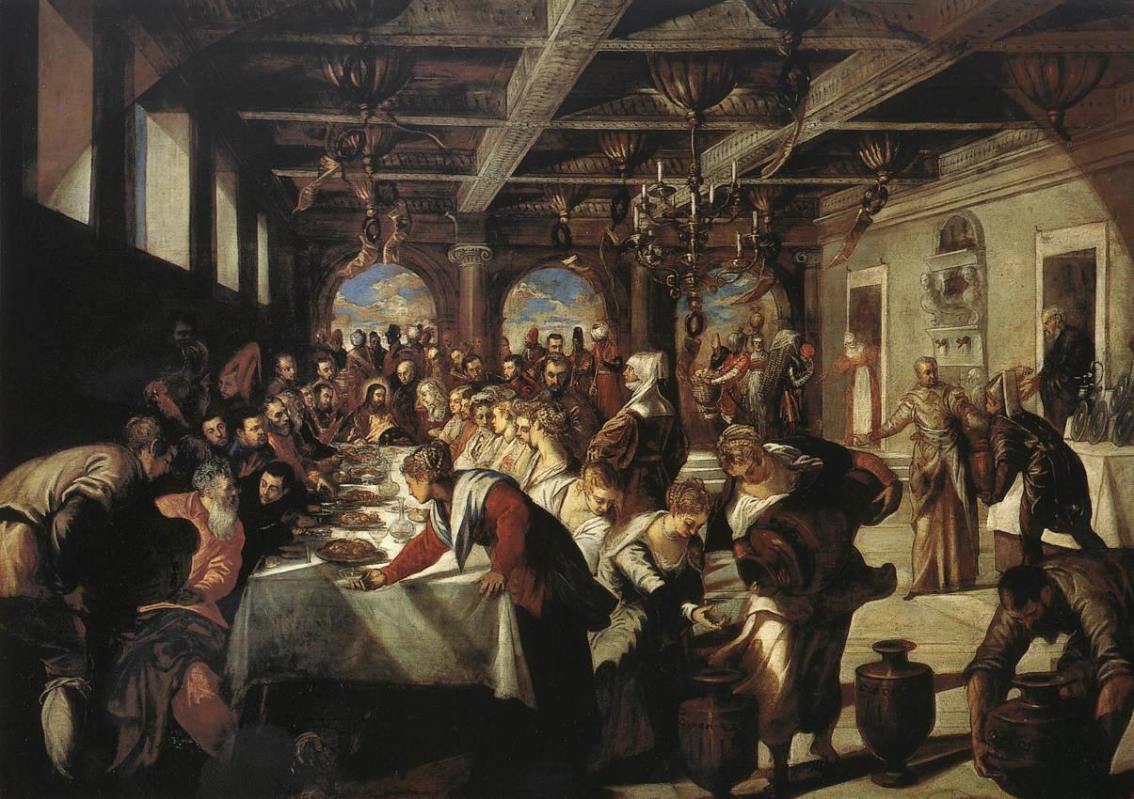
Whenever I listen to the Gospel that we have just proclaimed, I am initially puzzled about the part of the story that describes the man who has been invited with the other latecomers from the streets and the peripheries of society but then is thrown back out into the street because he lacks a wedding garment, a garment that is appropriate for the joyful celebration of the wedding of a King’s Son. It seems rather unjust that this should happen since the guest was invited to the wedding without time to prepare to accept the invitation and to put on his “Sunday Best.”
This prompted me to investigate further and to discover that the “wedding garment” referred to in the parable was a type of small cape that would be given to guests when they entered the banquet hall for them to wear over their shoulders and cover whatever clothes that they were able to wear to the celebration. It is symbolic of our baptismal garment or christening gown. The man referred to in the Gospel refused to wear it and apparently felt that what he was wearing was sufficient for the celebration of the wedding of the King’s son. He refused the king’s gift because he thought that he did not need it. He symbolizes those of us who refuse God’s Grace. He symbolizes those of us who believe that we do not need God or anybody else.
Everything is a grace, including our faith, and none of us are Christians or Catholics on our own initiative, but rather we are so because of God’s Grace and we are here today at this Sunday Mass to remind each other of this easily forgotten truth and to be reminded by our Lord and King in the readings and in the prayers of His banquet, the Eucharistic banquet of the Mass. In accepting His invitation, we accept the gift and responsibilities of being His friends.
As our late Holy Father, Pope Francis, observed several years ago about this parable, “That man, having rejected the free gift, excluded himself: thus, the king could do nothing but throw him out. This man accepted the invitation but then decided that it meant nothing to him: he was a self-sufficient person; he had no desire to change or to allow the Lord to change him. The wedding garment — this capelet — symbolizes the mercy that God freely gives us, namely, grace. Without grace we cannot take a step forward in Christian life. It is not enough to accept the invitation to follow the Lord; one must be open to a journey of conversion, which changes the heart.”
Even more than mercy, the wedding garment represents the virtue of charity which we are given by God at our Baptism and nourished in by the Eucharist. Faith is essential but it only opens the door for us into the life of charity. We are baptized and confirmed in our faith so that we can receive the Eucharist and become people of charity and love. As Saint Gregory the Great wrote in his homily on this Gospel, “Therefore each one of you in the Church who has faith in God has already taken part in the wedding feast but cannot claim to wear the wedding garment unless he jealously guards the grace of love. And this garment is woven symbolically on two looms of wood, one above and one below: love of God and love of neighbor.”
During these current times when communication is so rapid through social media and other means of technology, times when we are able to access the words of Catholic apologists and reputed scholars — it is important for us to listen for the words of Jesus and the disposition of charity in what they say and how they say it. Accuracy in the tenets of the faith is insufficient if charity is lacking. Our actions, even more than our words, must be more than “nice” or “kind.” They must be Christ-like. To be charitable means that we show our willingness to change by being inconvenienced in our plans for the sake of others. It is placing other people’s good before our own.
We are here again this Sunday because we have accepted God’s invitation to the wedding banquet of His Son with humanity. We have accepted His invitation to be His friend. In a few moments He will invite us to partake fully in this banquet of love as we receive Holy Communion. This action should change us if we are willing to change. Are we willing to accept this invitation, to be grateful for it, and to show our gratitude by generously giving to care for others that they might also be invited to this banquet — the most excellent of “friendship dinners,” the Eucharist?

