
Homily for the Twenty-fourth Sunday of Ordinary Time
September 13, 2026
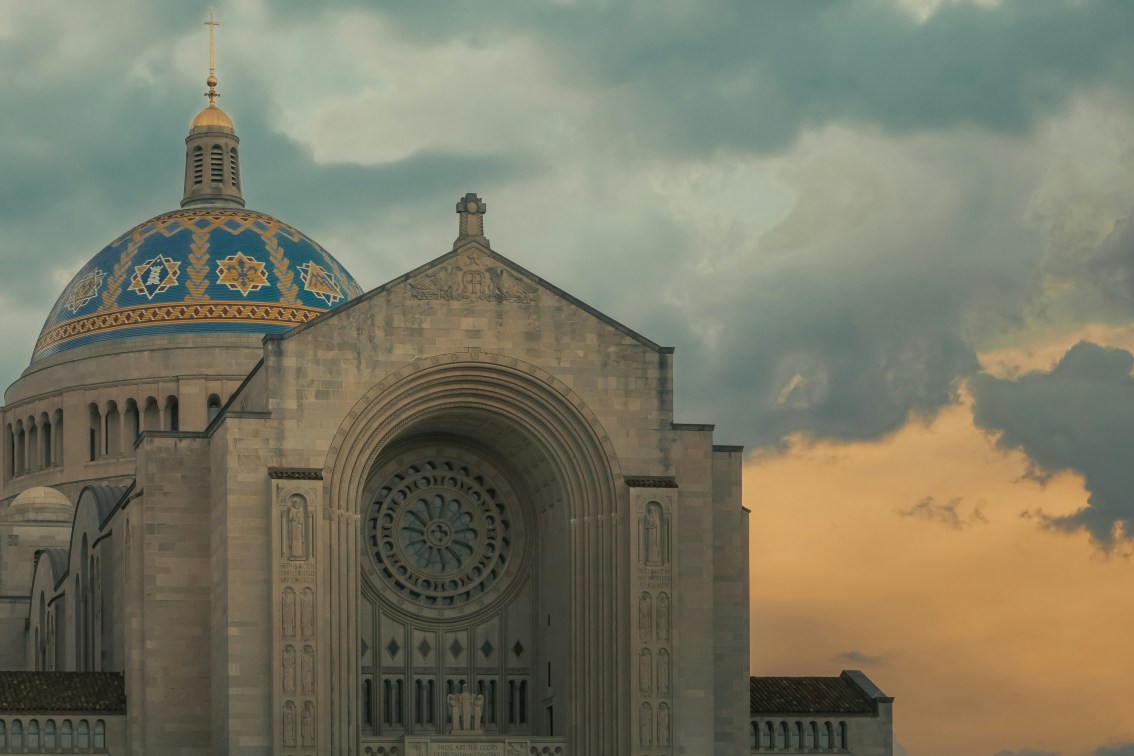
Basilica of the National Shrine of the Immaculate Conception
Washington, D.C.
Sirach 27:30-28:7
Psalm 103:1-2, 3-4, 9-10, 11-12
Romans 14:7-9
Matthew 18:21-35
“Wrath and anger are hateful things, yet the sinner hugs them tight.” These words from the Book of Sirach, the first reading in our Mass, offer an instruction on anger, vengeance, and forgiveness. Wrath is a destructive force, and because of our emotions we are prone to let it overtake us and drive us farther away from reason. We remember insults and injuries we have received and feel justified in returning the same. Our irritations soon become grudges, and our irascibility frequently turns to wrath and makes us become bitter, entitled, resentful and increasingly irrational. What exactly does it mean to hug anger tight?
The answer to this question is what comes into focus in the Gospel for this Sunday’s Mass — Christ’s parable that makes use of the example of the wicked servant. The wicked servant owed his Master (who represents God) an unpayable debt of what is enumerated as literally 150,000 years’ wages. While a fellow servant owed the wicked servant a much smaller debt of the sum of one hundred days’ wages. The Master forgives the wicked servant the entire debt which manifests God’s imponderable mercy.
As soon as the wicked servant receives from his master the forgiveness of his unpayable debt, the first thing he does is intentionally hunt down his fellow servant who is indebted to him of a smaller and payable debt. Scripture makes clear that the wicked servant does this intentionally and with passion.
Upon finding his fellow servant, the first thing he does is seize and choke the indebted servant. It is only after unleashing his wrath upon his fellow servant does he demand repayment from him. The wicked servant is not as interested in receiving payment of what he is owed as he is in unloading his wrath upon his debtor. Let us remember that unlike his own debt that was forgiven by his master, the debt owed to him was possible to be settled. The indebted servant offers to satisfy the debt but begs for time to do so. The wicked servant does not want a just repayment. He craves extracting revenge. He craves retribution. His anger has become wrath and has detached him from reason let alone from faith.
The example of the wicked servant shows us that resentment is an addictive dynamic. It can consume us and paralyze us into a state that we refuse to leave because life has not afforded us the opportunity to be the judge, jury, and executioner where we exercise our self-claimed right to accuse, to condemn, and to punish those whom we judge have offended us. This might include family members, teachers, superiors, or former friends. Such a posture is incongruous for someone who has offended God infinitely and is indecent for someone who has had his own sins washed away by the Blood of the Innocent Lamb of God. As if no one has ever suffered an indignity as we have suffered and therefore, we are entitled to extract revenge. We can see here how such wrath takes the form of an idolatry because God who is perfectly just and merciful is thrown down by us from His rightful sovereignty in our hearts and replaced by our demand for retribution.
When Jesus commands us to forgive seventy-seven times, He is asking for complete forgiveness on our part. Such forgiveness takes time and involves our healing of the pain that we have suffered from the injustice done to us by another person. But most especially forgiveness requires Grace. It requires us to seek from God the Grace of a willingness to forgive. Clinging to these offenses will never lead us to peace of heart or to God. Remembering in prayer what we have been given and how often we have been forgiven allows the Holy Spirit to enter and change our hearts and our willingness to forgive.
Forgiveness is not a political strategy. It is not conniving to get our way. It offers us an opportunity to live and to love as God loves without counting the cost. We can only do this with Grace. This should prompt us not to nourish our resentments, for example through such habits as rage scrolling in social media. As we continue with this Eucharistic celebration, let us place our resentments as an oblation along with the gifts of bread and wine on this altar of sacrifice. Let us ask the Lord to deliver us both from indifference and from wrath and that He might lead us instead to His Justice and His Mercy that we might truly manifest our identity as loved sinners by forgiving as we have been forgiven.

